AUDVERA · START WHERE THE AUDIT STARTS

What audit are you running?

Type the audit. The engagement skeleton — risks ranked, procedures sourced, evidence drafted — is waiting in your trial before your team's first standup.

Try:

No credit card. No procurement form. 14 days inside the actual product.

The operating model

Engagement execution and controls operations in the same audit trail.

Audvera isn't a chatbot or a dashboard. It's the linked record system audit teams need to move from research to reporting without losing the trail.

Workflow at a glance

Watch the work walk through.

One trail. Six steps. The audit graph carries context through every one of them.

Step 01 / 06

Plan

Scope, objectives, and engagement context in one record.

auto

From

Launchpad

Next

Risks

Engagement record

Draft from intake

NIS2 2026 · Q1 fieldwork

Objectives

3

Risks scoped

5

Stakeholders

8

Hover to pause · ← → to step · space to toggle

Why it changes the economics

The win isn't AI output. It's audit work that never gets rebuilt.

Planning compresses. Evidence stays linked to the risk that named it. Review happens where the work happens. Reporting inherits the approved trail. Each step removes a class of rework — not just a manual chore.

3 days -> 18 min

Planning compression

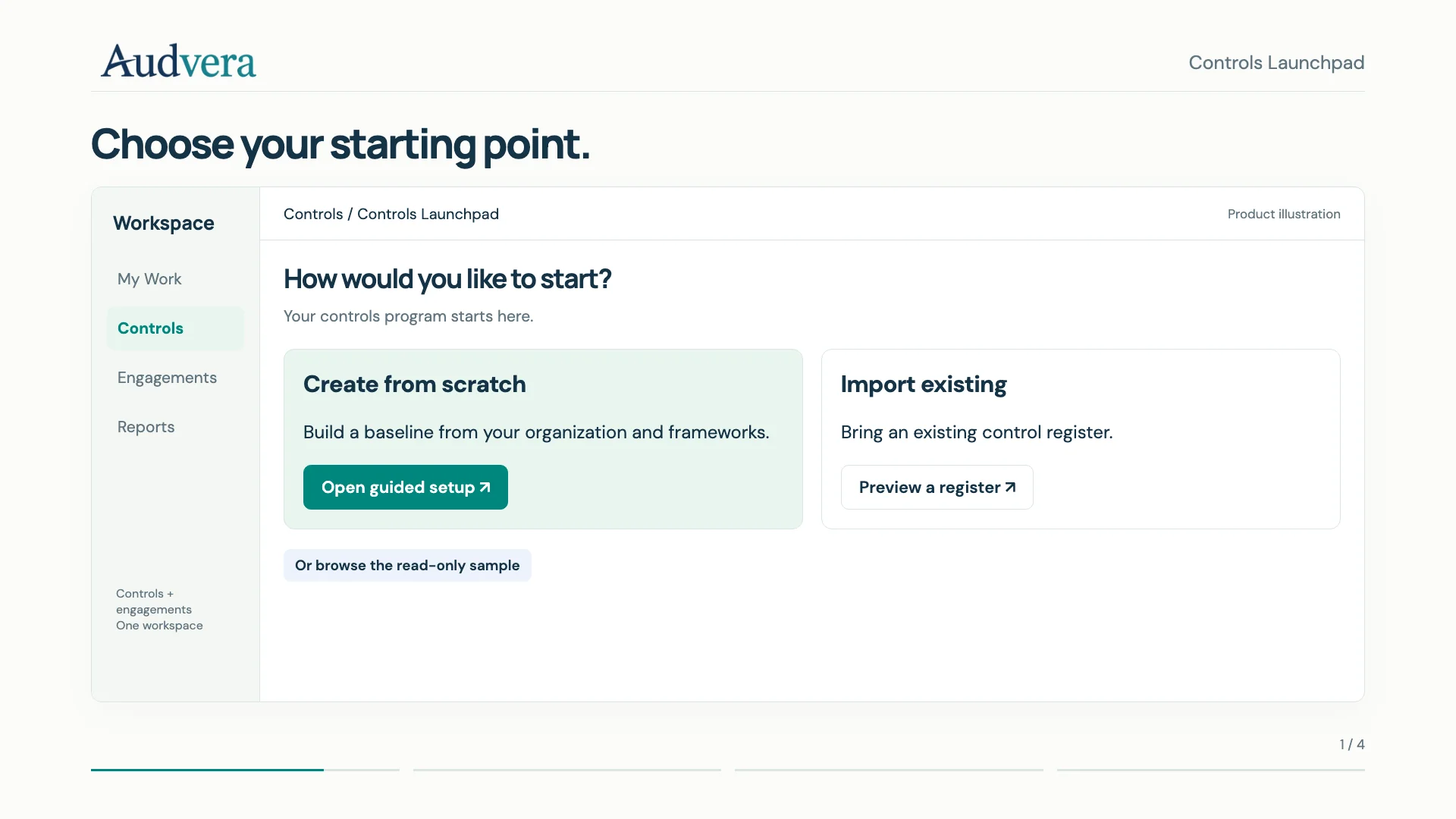
Launchpad makes "Full plan built in 18 minutes" tangible: engagement foundation, procedure set, assignments, and data requests ready for review.

1 trail

Less reviewer chase

Risk, control, test work, evidence, owner responses, exceptions, and approvals stay connected.

No rebuild

Lower report assembly cost

Report language inherits approved findings, linked support, management response, and signoff context.

THE COMPLETE AUDIT

From risk selection to signed report - nothing leaves the platform.

Audvera keeps planning, fieldwork, evidence review, and report delivery in one connected workflow so teams move faster without losing audit discipline.

End-to-end workflow

One connected system for planning, execution, review, and final reporting.

Plan build

18 min

Linked evidence

142

Phase 01

1/5

Scope & risk priorities

Define engagement scope, select control families, and rank risk themes in one guided screen.

Scope locked | expanding mandates without extra budget pressure

Entity: Public
Engagement: Financial
Scope: FY2026
Controls: Revenue
Controls: ITGC
Controls: Procurement
RevenueThird-partyAccessJournal EntriesAI Governance

Budget-Scope Pressure (IIA Pulse 2025)

47%

audit teams report underfunding

Planning Time

-

from 3 days to 18 minutes

Spreadsheet Fire-Drill Fragmentation

0

evidence items linked, reviewed, and traceable

Report Delivery

-

The field's blind spots

Most audit AI pages ignore the work CAEs get blamed for.

The risk isn't whether AI drafts a paragraph. It's whether the team can defend coverage, source decisions, and prove review before the audit committee asks.

They sell a prompt box.

A prompt box cannot carry audit accountability. Audvera loads scope, risks, controls, evidence, review comments, and standards context before AI drafts anything.

They detach the risk register.

Engagement work and the controls catalog should not become two sources of truth. Audvera keeps risks, controls, procedures, and tests tied together while the audit moves.

They hide the judgment trail.

AI can draft, but a CAE has to defend who accepted the work. Audvera records review gates, changes, comments, and signoff where the work happens.

They make adoption the project.

The first value moment has to happen inside an audit workflow, not after a taxonomy cleanup. Audvera starts from a free assessment or demo context, then opens Launchpad with context attached.

From prompt to proof

The trial isn't a sandbox. It's the first day of an actual engagement.

Generate the risk assessment with your own scope. Open a 14-day trial with that context already loaded. Test the workflow your team will actually use — not a demo dataset that doesn't match your reality.

01

Create audit context before the account.

A buyer can generate a free AI risk assessment with their own context or start from the Launchpad demo. Both routes are designed to make the trial feel like real audit work, not an empty sandbox.

02

Unlock a signed 14-day trial link.

The assessment path captures an email unlock and the demo CTA can send the same no-card trial link. New users get full trial access; existing users are routed back into Launchpad with context ready.

03

Build the first plan in Launchpad.

Launchpad drafts objectives, procedures, data requests, interviews, owners, and candidate control links so the team edits judgment instead of starting from a blank document.

04

Convert into the right plan.

Pro and Team fit internal audit teams. Firm Starter and Firm Growth add multi-client workspaces, branded reports, and client portal workflows. Enterprise adds security, SSO, and custom rollout support.

Choose the buying path

Start with proof. Scale with the plan that matches how audit is delivered.

Self-serve auditors get into the product fast, with real context. Teams and firms with procurement, security review, branded reporting, or client portals scope the rollout with sales.

Type the audit. Open the trial with context attached.

Best for auditors who want hands-on proof before involving procurement. The topic field above creates the engagement skeleton and emails a signed 14-day trial link — no card, no procurement form.

  • Topic-first intake drafts objectives, risks, and procedures before login
  • Trial opens with an engagement record already named after your scope
  • Pro trial by default, with upgrade paths to Team or Firm

Scope Team or Firm rollout with sales.

Best when the decision includes multiple auditors, controls coverage, procurement, security review, or client-facing firm workflows. Team fits internal audit. Firm adds multi-client workspaces, branded reports, and client portal workflows.

  • Team rollout for internal audit groups
  • Firm Starter or Growth for client-serving audit practices
  • Enterprise path for SSO, security review, and custom rollout

Buyer's committee

Answer objections before they become delay.

For CAEs, the real risk is not whether the demo looks clever. It is whether the system can improve audit work without weakening professional judgment.

Will auditors trust it?+

They keep acceptance control. Drafts expose basis, linked sources, and reviewer decisions.

Do we need a data cleanup first?+

No. The proof starts with one engagement and the control relationships that matter for that scope.

Can it support paid expansion?+

Yes. The trial shows a narrow value path, then paid rollout adds users, engagements, and controls coverage.

Is this another dashboard?+

No. The selling moment is work getting created, reviewed, and defended inside the audit flow.

Make the next audit and controls cycle the proof.

Type the audit. Open a trial with the engagement skeleton already drafted. Give the audit committee a defensible path forward.